How Long Does Concrete Last? A Homeowner's Guide to Lifespan, Maintenance & Replacement
Wondering how long concrete driveways, patios, and slabs last? Eagle Mountain concrete experts break down expected lifespans, warning signs, and maintenance tips to protect your investment.
5/6/20265 min read
How Long Does Concrete Last? A Homeowner's Guide to Lifespan, Maintenance & Replacement
Concrete is one of the most durable building materials available — but it's not invincible. Homeowners in Eagle Mountain often ask us: "How long will my concrete driveway actually last?" or "Is this crack serious, or can I ignore it?" The honest answer depends on several factors: the quality of the original installation, how the surface is maintained, and how much wear and tear it faces over the years.
This guide walks you through realistic lifespans for different concrete surfaces, the warning signs that signal trouble, and how regular maintenance can add decades to your investment.
Concrete Lifespan by Surface Type
Not all concrete surfaces age the same way. The amount of load, exposure, and use each surface endures directly influences how long it holds up.
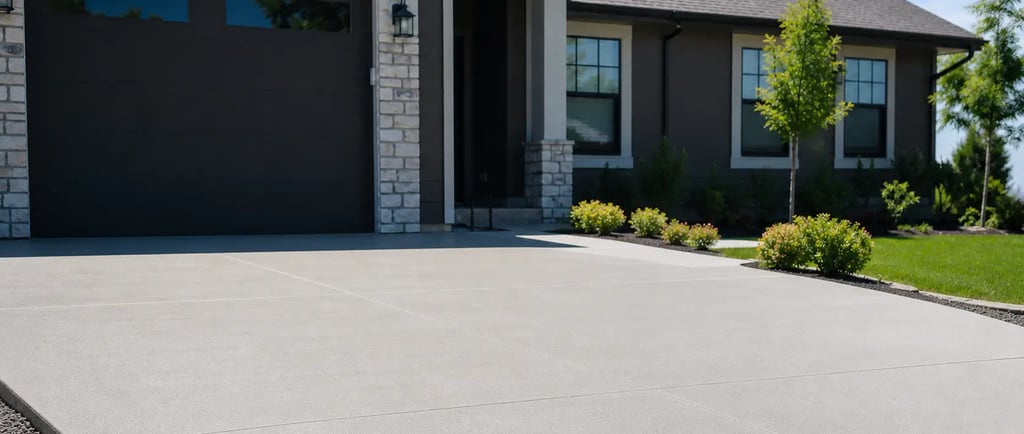
A concrete driveway is typically one of the hardest-working surfaces on your property. With proper installation and maintenance, driveways commonly last between 25 and 50 years, though heavy vehicle traffic, oil spills, and chemical exposure can shorten that window.
Concrete patios and sidewalks tend to fare even better, often reaching 30 to 50 years of serviceable life when properly sealed and maintained. Their lower traffic loads and reduced chemical exposure give them an advantage over driveways.
Pool decks face a tougher environment — constant moisture, pool chemicals, and steady barefoot traffic mean most pool decks have a realistic lifespan of 20 to 30 years before resurfacing or replacement becomes necessary.
Garage floor slabs sit somewhere in between, typically lasting 20 to 40 years depending on the loads they carry and how well oil spills and abrasion are managed over the years.
The single biggest factor that separates a 25-year slab from a 50-year slab? The quality of installation from day one. Proper base preparation, correct mix design, adequate reinforcement, and professional finishing all determine where your concrete lands on that spectrum.
5 Warning Signs Your Concrete Needs Attention
Catching problems early is always cheaper than waiting until they require full replacement. As Eagle Mountain's experienced concrete contractors, we recommend homeowners do a visual walkthrough of their concrete surfaces at least twice a year. Watch for these five warning signs:
1. Surface Scaling or Spalling
Scaling is when the top layer of concrete begins to flake or peel away in thin sheets. Once it starts, it accelerates if left unaddressed. Early-stage scaling can often be treated with a quality resurfacer; advanced spalling usually calls for slab replacement.
2. Wide or Growing Cracks
Hairline cracks under ¼ inch are often cosmetic and manageable with sealant. Cracks that are widening, deeper than the surface, or running in a spreading pattern across a slab indicate a structural issue — such as base settlement or insufficient reinforcement — that needs professional evaluation.
3. Sinking or Uneven Sections
If one section of a driveway or patio has dropped lower than an adjacent section, you have a base or subgrade problem. Uneven concrete is both a trip hazard and a drainage problem. Depending on severity, mudjacking or full slab replacement may be the right call.
4. Pitting and Surface Erosion
Small pits or a rough, sandpaper-like texture developing across the surface indicate aggregate exposure — typically from surface wear or chemical attack. Resealing and resurfacing can address mild pitting before it worsens.
5. Drainage Problems
Water pooling on or around concrete surfaces after rain is a red flag. Poor drainage accelerates concrete deterioration and can cause water intrusion near your home's foundation. This is worth addressing promptly — not just for your concrete, but for your home overall.
Concrete Repair vs. Full Replacement: How to Decide
One of the most common questions we answer at Concrete Eagle Mountain is: "Should I repair this or just replace it?" The answer comes down to three things: scope, depth, and age.
Repair is typically the right choice when damage is isolated to a small section of the total surface, cracks are surface-level and not structurally compromised, the slab is relatively young (under 15 years old) and the base is solid, or the issue is purely cosmetic — scaling, staining, or surface texture loss.
Replacement makes more sense when cracking is widespread across the entire surface, the base or subgrade has failed causing sinking or heaving, the slab is over 30 years old and showing multiple compounding issues, or the cost of repeated repairs is approaching the cost of a brand-new pour.
Our team offers honest assessments — we won't recommend a full replacement when a repair will do the job, and we'll tell you plainly when a repair is just delaying the inevitable. You can contact us for a free evaluation and we'll walk your property with you.
How to Extend the Life of Your Concrete
Proper maintenance is the single most cost-effective thing a homeowner can do to protect their concrete investment. Here's what we recommend:
Seal your concrete regularly. A penetrating or film-forming sealer acts as a barrier against moisture, staining, and surface wear. New concrete should be sealed after the initial curing period — typically 28 to 30 days — then resealed every 1 to 3 years depending on traffic and exposure.
Clean spills promptly. Oil, gasoline, and chemical spills can break down the concrete binder over time, especially on garage floors and driveways. Clean up spills quickly with an absorbent material and rinse thoroughly.
Avoid harsh chemical deicers. Certain deicers — particularly ammonium sulfate and ammonium nitrate — are chemically aggressive to concrete. If you need to address icy surfaces on your driveway or walkway, opt for sand for traction or products specifically labeled as concrete-safe.
Keep drainage clear. Make sure gutters, downspouts, and landscape grading direct water away from your concrete surfaces. Standing water is one of concrete's quiet enemies.
Fill cracks early. Small cracks are an invitation for water to enter and expand. Fill them with a flexible polyurethane or epoxy crack filler before they grow. This is a DIY-friendly task that pays off significantly in the long run.
Don't ignore edge cracking. Edges and corners are the most vulnerable parts of any concrete slab. If you notice edge cracking, have it evaluated before the section breaks free entirely.
When Is the Best Time to Install New Concrete in Eagle Mountain?
If your inspection reveals it's time for new concrete — whether a full driveway replacement, a new patio pour, or a garage floor — timing your project right ensures the best results. At Concrete Eagle Mountain, we work year-round, but late spring through early fall is the optimal installation window for our area, giving new concrete ideal curing conditions.
Getting on the schedule early — especially heading into summer — means you'll have your new surface ready before the peak outdoor season and have plenty of curing time before the first frost arrives.
What Professional Installation Does for Longevity
The lifespans outlined earlier assume one important thing: the concrete was installed correctly from the beginning. Poorly prepared bases, inadequate reinforcement, incorrect water-to-cement ratios, and rushed finishing work are the root cause of most premature concrete failures we see in the field.
This is exactly why homeowners across Eagle Mountain, Saratoga Springs, Lehi, American Fork, Highland, Cedar Hills, Alpine, Pleasant Grove, Lindon, Orem, and Vineyard trust our team to do the job right. We invest the time upfront in site prep, use quality materials, and back every project with our workmanship commitment.
Professional teams serving other markets hold themselves to the same standard. Fort Myers Concrete Experts brings that same disciplined, installation-first approach to residential and commercial concrete projects in Southwest Florida — a reminder that quality concrete work is about proven process and expertise, no matter where you are in the country.
Ready to Assess or Upgrade Your Concrete?
Whether you're trying to decide between repair and replacement, or you're ready to move forward with a brand-new installation, our team is here to help you make the right call.
Get your free concrete evaluation from Concrete Eagle Mountain today.
No pressure, no pushy sales tactics — just honest, professional guidance from contractors who have been serving Eagle Mountain homeowners for years.
801-406-3780
For professional concrete services in Fort Myers, FL — including driveways, patios, and commercial slabs — visit Fort Myers Concrete Experts to explore their full range of services.
Quality concrete solutions for your construction needs. Whether you're building a new home, renovating an existing structure, or undertaking a large commercial project, our expertise in concrete services ensures that you receive durable and efficient results tailored to your specific requirements. We pride ourselves on using high-quality materials and advanced techniques to deliver excellence in every project we handle, guaranteeing customer satisfaction and reliability.
Get a Free Concrete Estimate in Eagle Mountain, UT
801-406-3780
info@concreteeaglemountain.com
Hours
Monday - Friday 7:00 AM - 6:00 PM
Saturday 8:00 AM - 4:00 PM
Eagle Mountain, Utah
© 2025. All rights reserved.